

If your business is like most, you generate outdated electronics faster than you realize. That’s where corporate ewaste recycling comes in, keeping your company secure and sustainable.
Companies trust certified recyclers to safely manage and repurpose old devices.
In this guide, you’ll discover the true impact of corporate ewaste recycling, how it works, and why every organization should make it a priority. By the end, you’ll have actionable steps to protect your data, reduce environmental impact, and enhance your corporate reputation.
What is eWaste?
E-waste, or electronic waste, refers to discarded electronic devices like computers, smartphones, printers, and servers. Every year, businesses accumulate tons of outdated electronics that contain hazardous materials.
Without proper disposal, these devices can leak toxins into the environment and pose security risks. The problem is growing fast.
Estimates show millions of tons of e-waste are generated each year globally, and businesses are a major contributor. Corporate electronic recycling programs help mitigate this problem by responsibly managing and repurposing old electronics.
E-waste is A Growing Problem
Let’s face it: most companies underestimate how much e-waste they produce. From outdated computers to broken office equipment, the pile grows quickly.
Improper disposal not only harms the environment but can also create legal headaches for your business. Regulations are tightening, and businesses are expected to comply with state and federal rules for safe electronic disposal.
That’s why adopting a corporate ewaste recycling program is no longer optional; it’s essential.
A 2024 UN report states that we produce 62 million tonnes of electronic waste every year, making it one of the world’s fastest-growing waste streams.
This poor waste management causes $78 billion in costs to health and the environment each year.
Benefits of E-waste Recycling For Your Business
Recycling electronics isn’t just about compliance; it’s a smart, strategic move that supports your bottom line, protects your reputation, and future-proofs your operations. Here’s how your company benefits from recycling your electronics.

Positive Environmental Impact
Every piece of electronic equipment contains materials that can harm the environment if disposed of improperly. Recycling diverts these devices from landfills and ensures hazardous substances, like lead, mercury, cadmium, and flame retardants, are handled safely.
By partnering with a certified recycler, your business actively reduces pollution, conserves natural resources, and supports the responsible recovery of valuable metals such as copper, silver, and gold.
It’s a measurable, meaningful step toward reducing your environmental footprint.
Sustainability
Launching a structured corporate e-waste program demonstrates that your organization is committed to long-term sustainability, not just short-term convenience.
Employees feel proud to work for a company that cares about the planet, clients notice your environmental responsibility, and partners appreciate your alignment with modern ESG expectations.
E-waste recycling becomes a visible, actionable part of your sustainability strategy.
Enhance Data Security
Outdated devices are often forgotten, but the data on them isn’t. Hard drives, servers, smartphones, medical equipment, and even printers store confidential information long after they’re powered off.
Certified electronics recyclers follow strict, verifiable processes for data destruction, ensuring sensitive information is wiped, shredded, or degaussed according to industry and federal standards.
This eliminates the risk of data breaches, identity theft, compliance violations, and legal exposure.
Open Revenue Streams
Many businesses are surprised to learn that their outdated devices still hold monetary value. Through proper recycling and refurbishing, components can be harvested, precious metals can be recovered, and certain equipment can be resold or repurposed.
This creates a new revenue stream that offsets recycling costs, or even turns old electronics into a profit center. Instead of paying to dispose of equipment, your business can recapture value from it.
Improve Reputation
Today’s clients and partners want to work with environmentally responsible, security-minded companies. Having a formal recycling program signals that your business takes sustainability and data protection seriously.
This boosts brand trust, strengthens corporate credibility, and differentiates your company in competitive markets.
Recycling your e-waste showcases your commitment to doing what’s right for the environment, your customers, and your community.
According to a Getty report, 82% of consumers want companies to have clear ESG guidelines.
How to Start an Electronics Recycling Program
Starting a corporate electronics recycling program doesn’t have to be overwhelming. With a clear plan and the right partner, your business can streamline operations, protect sensitive data, and stay compliant.
Follow these steps to build a program that works every time.
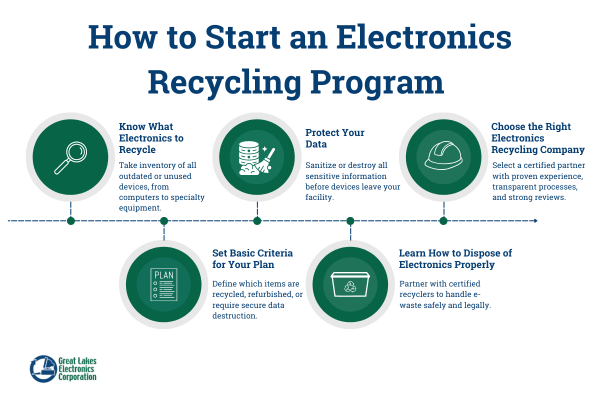
1. Know What Electronics to Recycle
Begin by taking inventory of outdated, damaged, or unused equipment. This may include computers, servers, monitors, phones, tablets, printers, copiers, cables, POS devices, networking gear, and specialty equipment unique to your industry.
Creating a list helps you understand your recycling volume and plan the right disposal method.
2. Set Basic Criteria for Your Plan
Establish clear rules for how devices are handled before, during, and after the recycling process.
Decide which items will be recycled immediately, which can be refurbished, which require data destruction, and which should be stored temporarily for audits or reporting.
When everyone follows the same criteria, your program becomes predictable, efficient, and easy to manage.
3. Protect Your Data
Before any device leaves your building, your data must be secure. That means sanitizing, deleting, overwriting, or physically destroying data on hard drives and storage media, depending on sensitivity and compliance requirements.
Working with a certified partner ensures every step aligns with NIST, HIPAA, GLBA, and other strict data protection standards.
4. Learn How to Dispose of Electronics Properly
Never throw e-waste in the regular trash; it’s illegal in many regions and dangerous for the environment.
Make sure your team understands what can be recycled, what must be handled as hazardous waste, and what needs special processing.
Partnering with a certified electronics recycler guarantees your devices are dismantled, sorted, and processed according to federal, state, and industry regulations.
5. Choose the Right Electronics Recycling Company
The success of your program depends on choosing a trusted, certified recycler.
Look for credentials like R2, ISO, or e-Stewards, along with proven experience, transparent processes, and strong customer reviews.
A recycling partner ensures full compliance, complete traceability, secure data destruction, and environmentally responsible disposal, so your program runs flawlessly from start to finish.
How to Prepare Your Business Electronics for Recycling
Proper preparation protects your data, prevents safety hazards, and ensures a smooth recycling process. Before handing off your devices, complete these crucial steps.

Data Sanitation
Data sanitation is the most important step in preparing electronics for recycling. Even devices that look “wiped” may still contain retrievable information, which puts your business at risk.
Start by removing all files, accounts, and stored credentials from your equipment. Delete documents, emails, photos, downloads, and application data.
Next, go deeper.
Delete Data
Manually removing files is only the first layer of protection. Make sure all folders, drives, and user profiles are cleared so no sensitive information remains visible.
This step reduces exposure but isn’t enough to secure confidential business data on its own.
Overwrite Data
Use certified data-erasure tools to overwrite the drive with random code or multiple wipe passes. This prevents advanced recovery programs from reconstructing your deleted data.
For high-security environments, finance, healthcare, government, and tech, multiple overwrites or physical destruction may be required.
Partnering with a certified recycler ensures your storage media is sanitized following strict NIST and DoD standards.
Separate Batteries from Electronics
Batteries pose a fire risk if not handled correctly, especially lithium-ion batteries found in laptops, tablets, smartphones, and handheld devices.
Carefully remove batteries before recycling and store them in a cool, safe container. This step protects your equipment, minimizes hazards during transport, and ensures each battery receives proper chemical processing.
Remove Ink and Toner
Printers, copiers, and multifunction office devices contain ink and toner cartridges that require special disposal. If tossed with regular electronics, they can leak chemicals or powder, contaminating other recyclables.
Remove all cartridges, seal them in their original packaging or a protective bag, and recycle them separately. Many recyclers offer dedicated programs for printer consumables.
Industries That Need Electronic Recycling
Every sector can benefit from responsible corporate electronic recycling. Whether your business generates a few outdated devices or entire server rooms, proper e-waste management protects sensitive information, supports sustainability, and ensures compliance.
Here’s a closer look at the industries that most commonly rely on certified electronics recycling.

Film and Media Production
Film studios, video production houses, and post-production facilities generate large amounts of e-waste, from old cameras and editing computers to external storage drives.
Recycling these devices not only reduces environmental impact but also ensures that proprietary content and sensitive project files are securely destroyed.
Offices
From small businesses to large corporate offices, outdated computers, printers, copiers, and phones accumulate quickly.
Responsible corporate ewaste recycling prevents office clutter, protects confidential data, and demonstrates a commitment to sustainability that employees and clients will appreciate.
Financial Institutions
Banks, credit unions, and investment firms handle sensitive client information daily. Secure recycling of old computers, mobile devices, and servers is essential to prevent data breaches and comply with strict industry regulations.
Manufacturing
Manufacturing plants often rely on specialized machinery and control systems that can become obsolete quickly. Recycling outdated equipment not only frees up space but also ensures hazardous components, like heavy metals and circuit boards, are disposed of safely.
Lean manufacturers can integrate e-waste recycling into their efficiency strategies.
Education
Schools, colleges, and universities upgrade tech labs and administrative equipment frequently. Computers, tablets, projectors, and lab devices often contain sensitive student or research data.
Healthcare
Hospitals, clinics, and research facilities rely on electronic medical devices, servers, and diagnostic equipment that store patient data.
Recycling these devices responsibly ensures compliance with HIPAA regulations and protects both patient privacy and the environment from hazardous materials.
Tech & Electronics Companies
High-tech firms, software developers, and electronics manufacturers experience rapid device turnover.
Secure IT asset disposition (ITAD) and recycling programs ensure obsolete laptops, servers, and mobile devices are safely processed while maintaining data security and environmental responsibility.
Government
Government agencies at the federal, state, and local levels manage a wide array of electronics, from office computers to specialized equipment.
Proper recycling protects sensitive citizen data, ensures compliance with strict regulations, and demonstrates responsible public stewardship.
Data Centers
Data centers, both private and public, handle massive volumes of servers, networking equipment, and storage devices.
Certified electronics recycling programs ensure obsolete hardware is securely destroyed, minimize environmental impact, and maintain business continuity during equipment upgrades.
Hotels
Hotels and resorts use electronic systems for front desk operations, POS devices, key card systems, and guest entertainment electronics.
Recycling outdated equipment responsibly prevents environmental harm and ensures guest data remains secure.
What Are the Laws Governing E-Waste?
Understanding e-waste regulations is critical for any business implementing a corporate electronic recycling program. Failing to comply can result in hefty fines, legal liability, and reputational damage.
Laws exist at both the state and federal levels to ensure electronics are disposed of safely, and certified recycling companies can help businesses navigate these requirements.
Michigan State Laws
Michigan has specific rules regarding the disposal of electronic devices, particularly those containing hazardous materials such as lead, mercury, cadmium, and brominated flame retardants.
Businesses in Michigan are required to recycle these electronics through approved methods rather than disposing of them in landfills.
Key points to consider:
- Covered Electronics: Computers, monitors, printers, televisions, and other devices that may contain hazardous substances.
- Certification Requirements: Businesses must work with recyclers certified in the responsible handling and recycling of electronic waste.
- Penalties for Noncompliance: Improper disposal can lead to fines, environmental liability, and potential legal action.
Partnering with a certified recycler ensures that your business complies with Michigan e-waste laws without the headache of tracking regulations yourself.
Federal Laws
At the federal level, the Environmental Protection Agency (EPA) enforces regulations designed to protect the environment from hazardous waste. The Resource Conservation and Recovery Act (RCRA) governs the disposal of hazardous electronic waste.
Businesses must follow guidelines for handling, storing, and disposing of devices that contain toxic materials.
Highlights include:
- Responsible Management: Ensuring that hazardous components are safely removed or neutralized before disposal.
- Record-Keeping: Maintaining documentation of how and where electronics were disposed of, which is essential for audits.
- Certified Recycling: Using certified recyclers helps your business meet federal standards for environmental compliance and reduces liability risks.
Compliance isn’t just about avoiding fines; it’s about protecting employees, clients, and the community while demonstrating your commitment to sustainability.
5 Key Benefits of Partnering With a Certified Electronics Recycler
Working with a certified recycling partner does more than clear out old equipment; it protects your business, your data, and the environment. Here’s why choosing a certified provider matters.

1. Environmental Responsibility
Certified recyclers follow strict standards to ensure that electronic waste is handled safely and sustainably. Hazardous materials, like mercury, lead, and cadmium, are removed and processed properly instead of ending up in landfills or contaminating the water supply.
The result? Your business significantly reduces its environmental footprint and supports a circular economy by reclaiming valuable materials.
2. Data Security Assurance
Every electronic device, computers, phones, servers, printers, and even medical equipment, stores sensitive information. A certified recycler uses secure data destruction methods such as degaussing, shredding, and NIST-compliant wiping to ensure that your data is permanently unrecoverable.
This protects your company from:
- Data breaches
- Compliance violations
- Legal and financial risk
3. Cost Savings and Operational Efficiency
Partnering with a certified recycler helps your business lower costs in several ways:
- Reduced storage expenses: No more paying for space to hold unused or outdated electronics.
- Avoided fines: Compliance with e-waste laws helps you avoid costly penalties.
- Potential revenue: Components and metals recovered during recycling can be refurbished or resold, providing a financial return.
Bottom line: You save money while improving operational efficiency.
4. Improved Reputation & Customer Trust
Consumers and business partners increasingly expect companies to operate responsibly. When you demonstrate a commitment to environmental protection and secure data handling, your brand earns credibility.
This boosts:
- Customer confidence
- Community trust
- ESG (Environmental, Social, Governance) performance
It’s a simple step that pays off in long-term brand loyalty.
5. Legal Compliance & Risk Management
E-waste laws vary at the state and federal levels, and navigating them can be overwhelming. Certified recyclers stay current on the latest regulations and ensure your electronics are processed according to EPA, RCRA, and state guidelines.
This protects your business from:
- Regulatory penalties
- Liability issues
- Improper disposal risks
A certified partner gives you peace of mind knowing your company is fully compliant.
Questions To Ask To Select The Right Partner
Choosing the right corporate ewaste recycling partner is one of the most important steps in building a secure and sustainable program. Not all recyclers are created equal, and working with an uncertified or inexperienced provider can put your business at risk.
To ensure you select the best partner, ask the following questions.

1. Are you certified?
Certification is non-negotiable. Look for R2 (Responsible Recycling) or e-Stewards certification. These certifications guarantee your partner follows strict environmental and data security standards.
A certified recycler demonstrates commitment to corporate ewaste recycling best practices.
2. What services do you provide?
Electronics recycling can include a range of services:
- IT asset disposition (ITAD)
- Secure data destruction
- Environmentally responsible disposal
Confirm that the recycler can handle all types of electronics your business generates, from computers and servers to printers and networking equipment.
3. What is your process for data destruction?
Data security is critical. Ask for details about how your partner erases or destroys data on hard drives, mobile devices, and storage media.
Do they overwrite data multiple times? Do they shred drives physically if needed?
A thorough data destruction process protects your business from potential breaches and liability.
4. Do you provide a Certificate of Destruction?
A Certificate of Destruction is proof that your devices were securely processed. This is essential for compliance with industry regulations and audits, particularly for healthcare, finance, and government organizations.
Make sure your recycler provides a certificate for each batch of electronics.
5. How much do your services cost?
Pricing can vary depending on the types of devices, volume, and level of service. Ask for a transparent quote upfront and clarify any hidden fees.
Remember, the lowest cost isn’t always the best choice; quality, certification, and security matter more.
6. How much experience do you have in recycling electronics?
Experience matters. Recyclers with a proven track record understand the nuances of corporate ewaste recycling and can manage large or complex projects efficiently. Ask about past clients, industries served, and the number of devices processed annually.
7. Can you provide reviews or references?
A reliable partner should have positive reviews or references from businesses similar to yours. This offers peace of mind and insight into their reliability, customer service, and overall performance.
Working with a certified partner ensures every question is answered and every need is met.
Work With a Certified Partner
Now you understand the critical importance of corporate ewaste recycling. From protecting sensitive data to supporting sustainability and boosting your business reputation, a proper e-waste program is essential.
Here’s what you should do next: contact Great Lakes Electronics Corporation, your certified Michigan partner for ITAD, electronic recycling, and IT management. Start reducing risk, protecting data, and enhancing your sustainability efforts today.
Don’t wait, turn your old electronics into secure, responsible, and profitable assets.
Take action now. Request a quote and see how simple responsible corporate ewaste recycling can be for your business.