
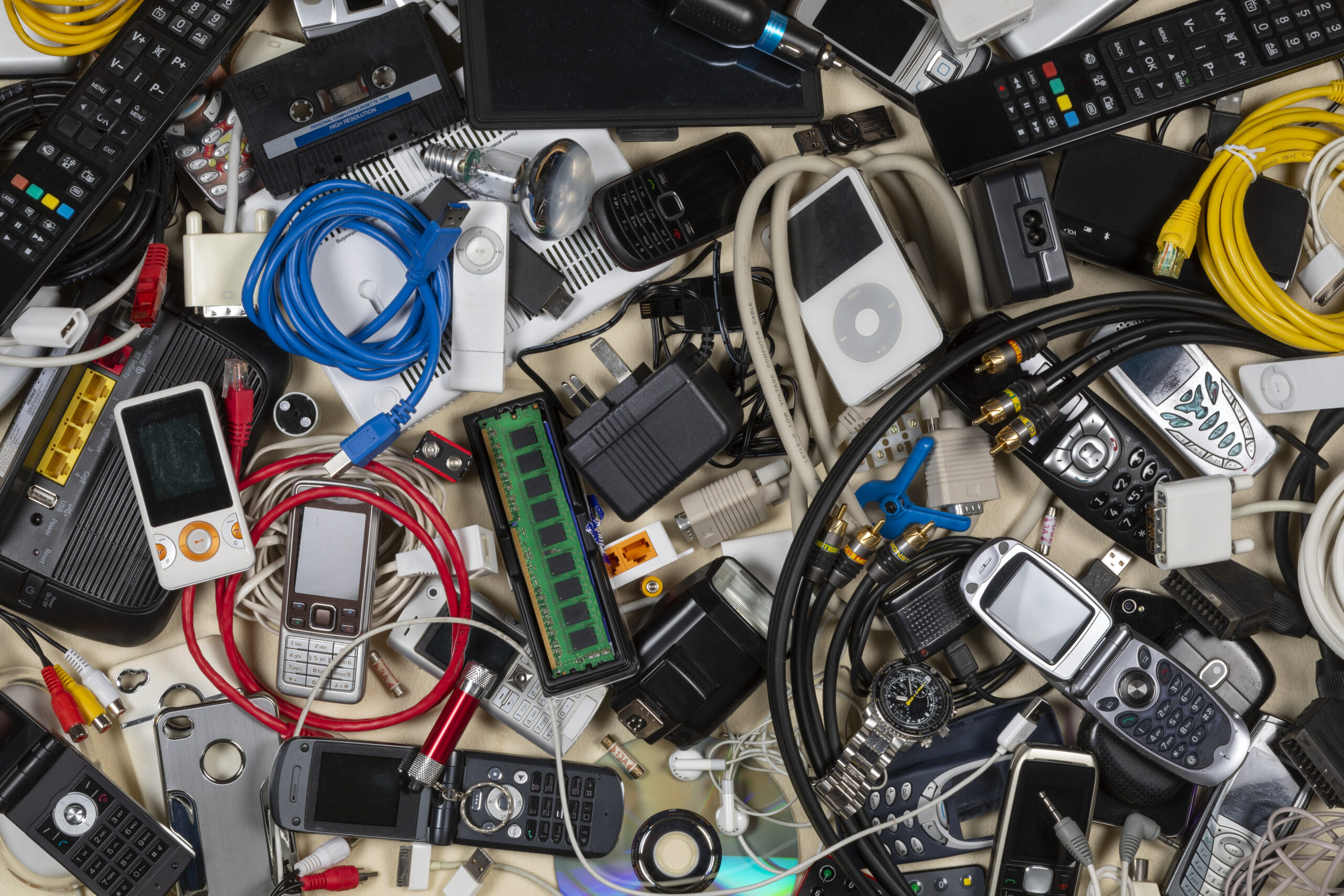
Your old phone is probably sitting in a drawer right now, unused and forgotten. So is your outdated laptop, that cracked tablet, and the printer you swore you’d recycle “someday.”
Here’s the problem. Americans generate millions of tons of electronic waste every year, and most of it never gets recycled.
In this guide, you’ll learn what electronics recycling really is, why ewaste recycling matters more than ever, and how working with a certified recycler protects your data, health, and the planet.
Let’s break it down step by step.
What is eWaste Recycling?
Electronic waste recycling, often called ewaste recycling, is the process of collecting, dismantling, and recovering materials from discarded electronics. These items include anything with a plug, battery, or circuit board.
That means smartphones, computers, TVs, appliances, and more. But here’s the key distinction.
Electronics recycling isn’t just disposal. It’s resource recovery. Inside your unused devices are valuable materials like copper, aluminum, gold, and rare earth metals.
A certified electronics recycler extracts these materials safely and responsibly.
Why You Shouldn’t Hoard Used and Old Electronics
We all do it. We stash old electronics “just in case” we need them again.
But hoarding electronic waste creates hidden dangers. Old electronics degrade over time. Batteries swell, casings crack, and internal components leak.
Hazards of Dumping Electronic Waste
When electronics end up in landfills, they don’t disappear; heavy metals like lead, mercury, and cadmium leach into the environment, contaminating soil, groundwater, and air. These toxins accumulate in ecosystems and human bodies.
Now let’s talk about the most dangerous component of all.
Lithium Batteries Require Special Disposal
Lithium-ion batteries power most modern electronics. They’re efficient, powerful, and extremely volatile when damaged.
When crushed or exposed to heat, lithium batteries can ignite, causing fires in landfills, recycling trucks, and facilities. That is why they don’t belong in household trash.
Proper ewaste recycling with certified recyclers who follow strict battery handling protocols helps prevent these disasters before they start.
Plus, they contain valuable materials that are critical to future energy storage and can be safely recovered.
Benefits of E-Waste Recycling
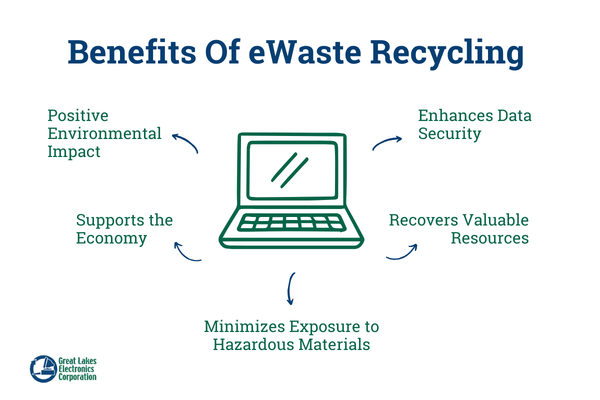
Electronics recycling delivers meaningful benefits that extend far beyond simple waste reduction. When handled responsibly, ewaste recycling protects the environment, limits pollution, and safeguards public health while supporting long-term sustainability goals.
Let’s break down the most important benefits of electronic recycling.
Environmental Benefits
Recycling electronics significantly reduces the volume of waste sent to landfills, where electronic devices can take decades to break down. By diverting ewaste from disposal sites, electronics recycling prevents harmful materials from accumulating in the environment.
At the same time, recycling conserves natural resources by recovering valuable materials such as copper, aluminum, steel, and precious metals. Reusing these materials reduces the need for mining and raw material extraction, which are energy-intensive and environmentally disruptive processes.
By lowering demand for new resources, ewaste recycling also reduces greenhouse gas emissions, directly supporting corporate sustainability initiatives and global climate goals.
Pollution Reduction
When electronics are improperly discarded, they release toxic substances into the air, soil, and water. Components such as lead, mercury, cadmium, and flame retardants can leach into groundwater or become airborne through burning or crushing.
Electronics recycling stops this contamination at the source. Certified recyclers carefully dismantle devices and isolate hazardous materials before they can cause harm. Batteries, circuit boards, and other high-risk components are handled using controlled processes that prevent leaks, fires, or environmental exposure.
The result is cleaner air, safer water, and reduced environmental pollution across communities.
Health Benefits
Toxic exposure from electronic waste poses serious risks to workers, families, and surrounding communities, particularly in areas where ewaste is improperly processed. Long-term exposure to heavy metals has been linked to respiratory issues, neurological damage, and developmental problems in children.
Responsible ewaste recycling minimizes these health risks by ensuring hazardous materials are managed safely and in compliance with strict environmental and safety standards. Certified recycling facilities protect both employees and nearby populations by eliminating unsafe handling practices.
Cleaner environments lead to healthier communities, creating a measurable and lasting impact that extends well beyond recycling itself.
How Are Electronics Recycled?
Have you ever wondered what actually happens after you drop off your electronics? The electronics recycling process is far more advanced and controlled than most people realize, especially when handled by a certified recycler.
Here’s a step-by-step look at how ewaste recycling works from start to finish.
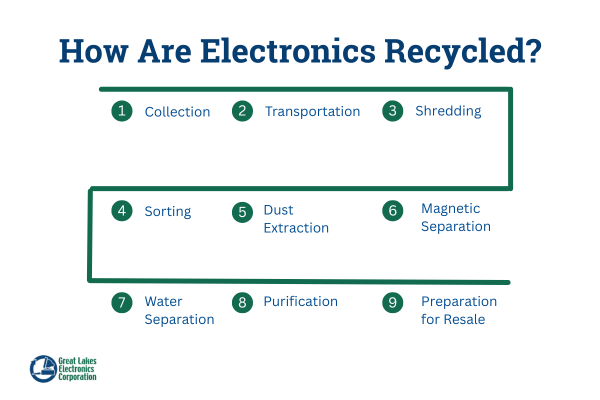
Step 1: Collection
The process begins with the safe collection of electronic devices from homes, businesses, or designated drop-off locations. Certified electronics recyclers ensure items are gathered in a way that prevents damage, data exposure, or environmental risk from the very start.
Proper collection also allows recyclers to identify items that require special handling, such as devices with lithium batteries or storage components that contain sensitive data.
Step 2: Transportation
Once collected, electronics are transported securely to a recycling facility using controlled logistics procedures. These safeguards help prevent breakage, unauthorized access, and environmental exposure during transit.
For businesses, secure transportation also supports chain-of-custody tracking, ensuring accountability from pickup through final processing.
Step 3: Shredding Electronics
After intake and any required data destruction, electronics are fed into industrial shredders. These machines break devices down into smaller, manageable pieces, making it easier to separate materials during later stages of recycling.
Shredding reduces the risk of intact components entering landfills or secondary markets and prepares materials for precise sorting.
Step 4: Sorting Electronics
Once shredded, the mixed materials move through automated sorting systems designed to separate plastics, metals, and electronic components. Advanced technology identifies material types based on size, density, and composition.
This sorting stage is critical for maximizing material recovery and ensuring each component moves to the correct recycling stream.
Step 5: Dust Extraction
Shredding and sorting generate fine dust that may contain hazardous substances. Dust extraction systems capture these particles before they can escape into the air, protecting both workers and the surrounding environment.
This step ensures that ewaste recycling remains safe, clean, and compliant with environmental regulations.
Step 6: Magnetic Separation
Magnetic separation systems are then used to extract ferrous metals, such as steel and iron, from the material stream. Powerful magnets pull these metals away from non-magnetic materials with precision.
Recovered ferrous metals are cleaned and prepared for reuse in the manufacturing and construction industries.
Step 7: Water Separation
Water separation techniques further refine the remaining materials by separating items based on weight and density. Lighter plastics float, while heavier materials sink, allowing recyclers to isolate each material type efficiently.
This process improves recovery rates and reduces contamination between material streams.
Step 8: Purification
After separation, materials undergo purification to remove remaining contaminants. This step ensures recovered metals and plastics meet quality standards required for resale and reuse.
Purified materials are far more valuable and can be reintegrated into new products, supporting a circular economy.
Step 9: Preparation for Resale
The final step involves preparing recovered materials for resale to manufacturers and processors. Metals, plastics, and other reusable components are packaged and documented for re-entry into supply chains.
At this stage, electronic waste transforms into usable raw material, closing the loop and reducing the need for new resource extraction.
Electronic Disposal Laws
You may be wondering, is it illegal to throw away electronics? In many states, yes.
Electronic disposal laws vary, but restrictions continue to expand. Certain devices, like TVs, computers, and monitors, are banned from landfills.
Businesses face even stricter compliance rules, and violations lead to fines, legal exposure, and reputational damage.
Electronic disposal laws are designed to protect the environment and public health as technology continues to evolve. Discarded electronics often contain toxic substances that can contaminate air, water, and soil when sent to landfills.
These laws ensure that electronics recycling and ewaste recycling are handled responsibly, reducing environmental damage while recovering valuable materials that can be reused.
State-Based Regulations in the U.S.
The United States does not have a single nationwide electronic disposal law. Instead, individual states set their own requirements based on local environmental priorities and waste management needs.
This means recycling rules can differ widely from one state to another. States adopted this approach to increase recycling rates and reduce the amount of electronic waste entering landfills while still allowing flexibility in how programs are implemented.
Federal Oversight and Environmental Protection
Federal legislation supports state efforts by providing structure and enforcement authority. The Resource Conservation and Recovery Act (RCRA) gives the Environmental Protection Agency oversight of hazardous and non-hazardous waste, including electronics, and outlines proper handling and recycling practices.
The Pollution Prevention Act complements this by encouraging businesses to reduce waste at the source and adopt more sustainable recycling and disposal methods.
8 Things in Your Home That Can Be Recycled
Most people underestimate how many everyday household items qualify as electronic waste. If a device contains a circuit board, battery, or electrical components, it should be considered for electronics recycling rather than tossed in the trash.
Here’s a quick reality check on common household electronics that belong in ewaste recycling programs.
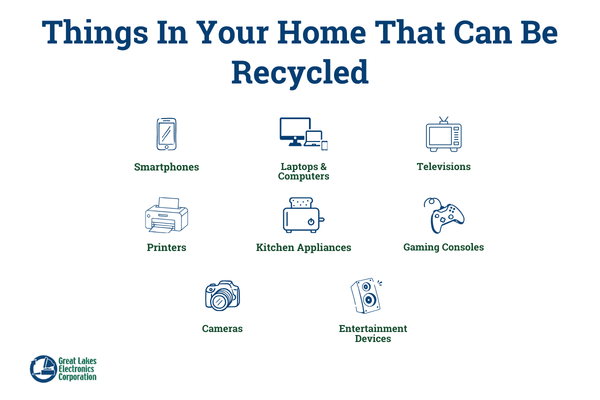
1. Smartphones
Smartphones are one of the most commonly stored and forgotten electronic devices in homes. Even when broken or outdated, phones contain valuable metals such as gold, copper, and rare earth elements that can be recovered through electronics recycling.
They also store large amounts of personal data, including photos, passwords, and financial information. Recycling smartphones through a certified electronics recycler ensures secure data destruction while allowing valuable materials to be reused.
2. Laptops and Computers
Laptops, desktops, and tablets contain complex electronic components that require specialized recycling processes. Hard drives and solid-state drives store sensitive personal or business information, making secure handling essential.
Certified electronics recyclers follow strict protocols to destroy data before dismantling devices, protecting you from data theft and compliance risks while responsibly recovering usable materials.
3. Televisions
Televisions are among the most hazardous household electronics due to materials such as leaded glass, mercury, and flame retardants. These substances pose serious environmental and health risks when TVs are discarded improperly.
Because of these hazards, televisions should never be placed at the curb or in regular trash. Responsible ewaste recycling ensures these materials are safely removed and processed in compliance with environmental regulations.
4. Printers
Printers combine electronics, plastics, metals, and sometimes toner or ink cartridges, all of which require proper handling. While they may seem like simple office equipment, printers contain circuit boards and other components that qualify as electronic waste.
With the right electronics recycling partner, every part of a printer can be responsibly recycled, reducing landfill waste and recovering valuable materials.
5. Kitchen Appliances
Many small kitchen appliances are often overlooked when it comes to ewaste recycling. Items such as microwaves, blenders, coffee makers, and toaster ovens all contain electronic components and wiring.
These appliances should be recycled rather than discarded, as electronics recycling prevents hazardous materials from entering landfills and allows metals and plastics to be reused.
6. Gaming Consoles
Gaming consoles contain circuit boards, processors, and lithium-ion batteries that require specialized handling. When damaged or improperly disposed of, these batteries can pose serious fire risks.
Recycling gaming consoles through a certified electronics recycler ensures batteries are managed safely while valuable components are recovered for reuse.
7. Cameras
Digital cameras, including point-and-shoot and DSLR models, contain sensors, circuit boards, and rechargeable batteries. These materials are highly recyclable but should never be thrown away with household trash.
Proper electronics recycling allows recoverable metals and components to be extracted while preventing environmental contamination.
8. Home Entertainment Devices
DVD players, speakers, sound systems, streaming devices, and receivers all qualify as electronic waste. While many of these devices are small, they still contain electronic components that require responsible recycling.
A simple rule applies: if it plugs in or powers on, it belongs in an electronics recycling program.
Barriers to Recycling (And How to Overcome Them)
Despite the growing importance of electronics recycling, many devices still end up stored in drawers or discarded improperly. These challenges are rarely about unwillingness; they’re usually driven by confusion, inconvenience, or concern.
Understanding the barriers to electronics recycling is the first step toward overcoming them.
1. Lack of Awareness
Many people simply don’t realize that old or broken devices are recyclable, or they don’t understand why ewaste recycling is so important. Confusion about which electronics qualify for recycling and where to take them often prevents action.
This issue is compounded by limited public education efforts. Without clear guidance, the environmental and economic benefits of electronics recycling remain abstract, making it easy for devices to be ignored or discarded.
How to overcome it:
Clear education, simple messaging, and accessible resources make a measurable difference. Certified electronics recyclers help bridge this gap by explaining what can be recycled, how the process works, and why responsible disposal matters.
2. Limited Access
Access remains a major obstacle in many regions. Some cities and states lack convenient electronics recycling locations, while others offer services that are inconsistent or difficult to use.
Limited access can include a shortage of drop-off bins, unreliable collection schedules, or long travel distances to recycling sites. When recycling feels inconvenient, participation drops, even among well-intentioned individuals.
How to overcome it:
Certified recyclers expand access through scheduled pickups, centralized drop-off locations, and tailored solutions for businesses and communities. Making recycling easier increases participation and reduces improper disposal.
3. Privacy and Data Security Concerns
Fear of data theft is one of the most common reasons people avoid recycling electronics. Old phones, laptops, and hard drives may still contain personal or business information, leading many to hold onto devices indefinitely.
Without clear assurances about data destruction, recycling feels risky.
How to overcome it:
Certified electronics recyclers implement secure, documented data destruction processes that permanently eliminate data before recycling begins. Providing proof of destruction reassures individuals and organizations that their information is protected.
4. Attitudes and Perceptions
Some people believe electronics recycling isn’t worth the effort, especially when devices no longer function. Broken or outdated electronics are often treated as worthless “junk,” despite still containing valuable and recyclable materials.
Busy schedules also play a role. When recycling isn’t top of mind, devices are forgotten, stored, or thrown away.
How to overcome it:
Shifting perceptions starts with demonstrating impact. When people understand that even non-working electronics have value, and that recycling directly benefits the environment and public health, they’re more likely to act. Convenient recycling options and clear reminders further reduce friction.
Where to Recycle Your Electronics
When it comes to electronics recycling, you have several options, but not all of them offer the same level of safety, transparency, or accountability. Where you choose to recycle your electronics directly impacts environmental outcomes, data security, and regulatory compliance.
Understanding the differences helps you make a responsible and informed decision.
Retail Drop-Off Programs
Many retailers offer electronics recycling drop-off programs, making them a convenient option for consumers. These programs typically accept a limited range of items, such as smartphones, small electronics, or accessories, and often exclude larger or more complex devices.
What’s less clear is what happens after the drop-off. Retail programs may rely on third-party vendors, and details about downstream handling, data destruction, or environmental practices are not always disclosed. Without transparency or documentation, it’s difficult to verify whether your electronics are recycled responsibly.
Retail drop-offs may offer convenience, but they rarely provide full accountability.
Municipal Recycling Programs
Municipal electronics recycling programs vary significantly by location. Some communities offer scheduled collection events or permanent drop-off facilities, while others provide minimal or inconsistent access to ewaste recycling services.
These programs are designed to manage volume rather than provide customized solutions. As a result, they may lack detailed tracking, data security measures, or compliance documentation, especially for businesses or organizations with sensitive equipment.
While municipal programs help reduce landfill waste, they often fall short when accountability and data protection are priorities.
Certified Electronics Recyclers
Certified electronics recyclers offer the most comprehensive and secure solution for electronics recycling and ewaste recycling. These providers manage the entire process, from collection and transportation to dismantling, data destruction, and material recovery.
Unlike retail or municipal options, certified recyclers operate under strict environmental and data security standards. They provide clear documentation, including certificates of recycling, data destruction verification, and chain-of-custody records.
For businesses, this level of oversight is critical. Chain-of-custody tracking ensures electronics are handled securely at every stage, while detailed reporting protects your organization from legal, regulatory, and reputational risk.
Keep reading to learn more about the benefits of recycling with a certified partner.
5 Key Benefits of Partnering With a Certified Electronics Recycler
Choosing a certified electronics recycler does more than help you get rid of old devices. It protects the environment, keeps your personal data safe, and gives you peace of mind knowing you’re doing the right thing.
Here’s why working with a certified recycler makes a real difference for you.
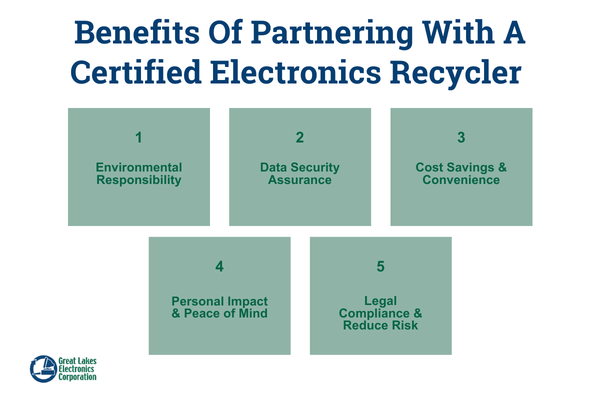
1. Environmental Responsibility
Certified electronics recyclers follow strict environmental standards that keep harmful materials out of landfills. Electronics often contain toxic substances like lead, mercury, and lithium that can pollute soil and water if improperly discarded.
Instead of letting those materials harm the environment, certified recyclers safely dismantle devices and recover reusable metals and components. This reduces the need for new mining, conserves natural resources, and helps lower greenhouse gas emissions.
When you recycle responsibly, you’re actively reducing waste and supporting a more sustainable future.
2. Data Security Assurance
Your old devices don’t just hold hardware; they hold your personal information. Photos, passwords, financial details, and private files can still exist long after a device stops working.
A certified electronics recycler uses secure, documented data destruction methods to ensure your information is completely erased. Whether through data wiping or physical destruction, these processes make your data unrecoverable.
This protects you from identity theft, data leaks, and privacy risks, giving you confidence that your information is truly gone.
3. Cost Savings and Convenience
Using a certified electronics recycler can save you time and prevent costly mistakes. Instead of guessing how or where to dispose of electronics safely, you get a clear, compliant solution that handles everything properly.
Certified recyclers help you avoid potential fines or issues that come from improper disposal. In some cases, recovered materials may even help offset recycling costs.
It’s a simple, efficient way to responsibly recycle without added stress or uncertainty.
4. Personal Impact and Peace of Mind
Recycling electronics the right way allows you to feel confident about your choices. Knowing that your old devices aren’t contributing to pollution or unsafe labor practices makes a meaningful difference.
Certified recycling shows a personal commitment to sustainability and responsible living. It’s an easy action that aligns your everyday habits with your values.
Sometimes, peace of mind is the biggest benefit of all.
5. Legal Compliance and Reduced Risk
Electronics disposal laws exist to protect people and the environment, and they apply to individuals, too. Improper disposal can lead to fines or environmental harm, often without people realizing the risk.
Certified electronics recyclers stay up to date on local, state, and federal regulations, ensuring your devices are handled legally and responsibly. Documentation and proper processes eliminate guesswork and reduce your exposure to risk.
By choosing a certified recycler, you turn electronics disposal into a safe, worry-free decision.
How to Select the Right Partner
Not all electronics recyclers operate at the same standard, and choosing the wrong partner can expose your organization to unnecessary environmental, legal, and data security risks. A reputable recycler should be able to clearly explain their processes, certifications, and safeguards, without hesitation or vague answers.
If a recycler struggles to explain how they handle your electronics or protect your data, that’s a clear signal to walk away. Your electronics, your data, and your reputation deserve a higher level of care.
Here’s what to look for when selecting a trusted electronics recycling and ewaste recycling partner.
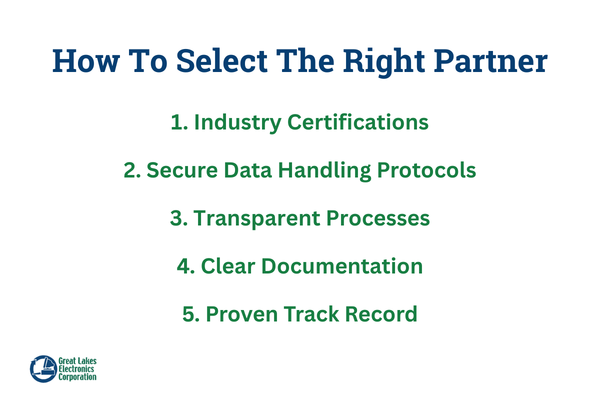
1. Industry Certifications
Industry certifications are one of the clearest indicators of a recycler’s credibility and commitment to best practices. Recognized certifications, such as R2 or e-Stewards, demonstrate that a recycler meets strict standards for environmental responsibility, worker safety, and proper electronics handling.
Certified recyclers undergo regular audits and must follow documented procedures for managing hazardous materials and downstream vendors. This level of oversight ensures your electronics are recycled responsibly and never diverted to landfills or unregulated export channels.
Without certifications, there is little accountability and far greater risk.
2. Secure Data Handling Protocols
Every device you recycle has the potential to store sensitive information, which makes secure data handling a non-negotiable requirement. A qualified electronics recycler should follow clearly defined data destruction protocols, including secure data wiping, degaussing, or physical shredding of storage media.
Just as important, they should be able to explain when and how data destruction occurs during the recycling process. Certified recyclers also provide documentation verifying that data has been destroyed beyond recovery.
These safeguards protect your organization from data breaches, compliance violations, and reputational damage.
3. Transparent Processes
Transparency is a strong indicator of trust and professionalism in ewaste recycling. A reliable recycling partner openly communicates what happens to your electronics at every stage of the process, from collection and transportation to dismantling and material recovery.
Rather than relying on vague assurances, a transparent recycler provides insight into how materials are processed and where they ultimately go. This visibility confirms that your electronics are handled ethically and responsibly, without environmental shortcuts.
When a recycler avoids specifics, it often signals deeper issues behind the scenes.
4. Clear Documentation
Proper documentation is essential for compliance, reporting, and peace of mind. The right electronics recycling partner provides detailed records that confirm how your equipment was handled and recycled.
This documentation typically includes certificates of recycling, data destruction reports, and chain-of-custody records. These materials are critical during audits, regulatory reviews, and ESG or sustainability reporting initiatives.
Clear documentation ensures accountability and provides proof that your organization followed responsible disposal practices.
5. Proven Track Record
Experience matters when it comes to electronics recycling. A recycler with a proven track record demonstrates consistency, reliability, and the ability to handle complex recycling needs over time.
Look for partners with established operations, positive client testimonials, and long-standing relationships across industries. A strong track record shows that a recycler doesn’t just promise responsible recycling. They deliver it.
The most reliable partners go beyond basic services, offering guidance, compliance support, and long-term value.
Don’t know where to begin? Ask these 7 questions to see if you found the right electronics recycling partner.
E-Waste Facts We All Need to Know
If you are going to remember anything from this, here are a few key takeaways.
- Discarded devices are a major data security risk, as deleted data can often be recovered, leading to costly cybercrime losses.
- Certified e-waste recyclers specialize in secure data destruction and provide documentation to verify your information is permanently erased.
- Incinerating e-waste releases toxic chemicals, harming the environment and contributing to serious respiratory health issues.
- Small electronics like phones and tablets make up nearly half of all e-waste, and their share is expected to keep growing.
- E-waste materials can be reused to make new products, including furniture, automotive parts, jewelry, and batteries.
- The United States generates about 6.9 million tons of e-waste each year. Globally, the World Economic Forum estimates that we’ll produce around 81.6 million tons of e-waste yearly by 2030.
- Recycling electronics saves massive amounts of energy, with one million laptops recycled equaling the annual energy use of more than 3,500 homes.
- Mobile device use has surpassed the global population, accelerating the growth of e-waste worldwide.
- Valuable raw materials worth billions are lost to landfills, with e-waste containing an estimated $62 billion in recoverable resources, according to the UN Global eWaste Monitor Report.
- A significant portion of landfill heavy metals comes from electronics, increasing environmental and economic costs.
- Circuit boards contain hazardous flame retardants that can impair learning and memory with long-term exposure.
- Lead in e-waste poses serious health risks, including cognitive impairment, paralysis, and coma.
- According to the UN Global eWaste Monitor Report, only 22% of global e-waste is recycled, leaving most electronics improperly discarded.
- E-waste recycling creates jobs, generating hundreds of thousands of positions worldwide.
- More e-waste is staying in the U.S., creating opportunities to boost recycling and strengthen the circular economy.
Recycle Your Electronics Safely
Electronics recycling is no longer optional; it’s essential. Responsible ewaste recycling protects the environment, prevents fires, secures data, and keeps you compliant.
More importantly, it turns waste into opportunity. And that’s where we come in.
As a certified electronics recycler, our company makes recycling simple, secure, and sustainable. From secure data destruction to responsible material recovery, we handle the entire process so you don’t have to.
Stop storing old electronics and stop throwing them away. Partner with a certified electronics recycler that puts safety, compliance, and sustainability first.
Ready to recycle your electronics safely and responsibly? Contact our team today and take the first step toward safer, smarter electronics recycling.